
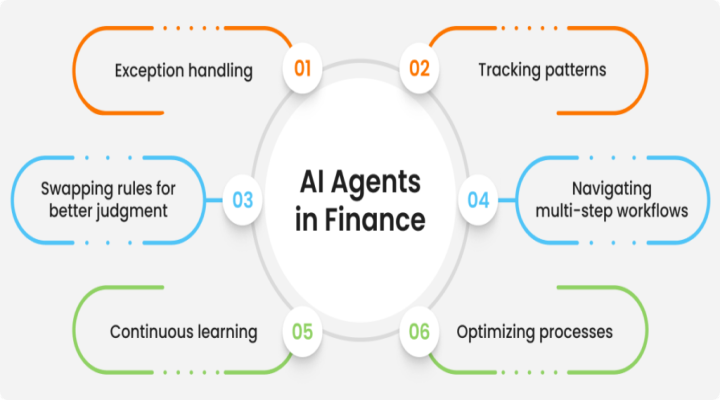
The accounting and finance function is undergoing a fundamental transformation. For decades, technology has focused on automating repetitive tasks—data entry, calculations, and reporting. Today, a new paradigm is emerging: Agentic AI. Unlike traditional automation or even predictive AI, Agentic AI systems can plan, reason, decide, and act independently toward defined financial goals. This shift is redefining how accounting and finance teams operate, make decisions, and deliver value.
From Automation to Autonomy
Traditional finance automation relies heavily on rules and workflows. Robotic Process Automation (RPA), for example, executes predefined steps with high efficiency but lacks contextual understanding. Agentic AI goes further. It operates as an intelligent agent that understands objectives—such as closing books faster, improving cash flow, or ensuring compliance—and dynamically determines the best actions to achieve them.
In practical terms, this means accounting systems no longer wait for human instructions. Instead, AI agents continuously monitor transactions, identify anomalies, investigate discrepancies, and initiate corrective actions, all within established governance frameworks.
Transforming Core Accounting Functions
Agentic AI is already reshaping key accounting areas:
- Accounts Payable: AI agents validate invoices, detect duplicates or fraud, negotiate payment timing for optimal cash management, and execute payments autonomously.
- Accounts Receivable: Agents track customer payment behavior, predict delays, send personalized follow-ups, and recommend credit policy adjustments.
- General Ledger: Continuous review of postings allows agents to flag misclassifications, suggest adjustments, and reduce month-end surprises.
- Financial Close & Compliance: Instead of last-minute reconciliations, AI agents work throughout the period, maintaining audit-ready records and highlighting compliance risks early.
This continuous, proactive approach significantly shortens closing cycles and improves data quality.
A New Role for Finance Professionals
One of the biggest misconceptions about Agentic AI is that it replaces accountants. In reality, it redefines their role. As routine tasks become autonomous, finance professionals shift toward higher-value activities—interpretation, strategic analysis, scenario planning, and advisory services.
For accounting firms, this enables a move from effort-based billing to insight-driven offerings. For enterprises, finance teams become strategic partners to the business rather than back-office operators.
Governance, Trust, and Control
Autonomy does not mean lack of control. Successful Agentic AI implementations are built with strong governance models. Approval workflows, explainable decision-making, audit logs, and human-in-the-loop controls ensure transparency and trust. AI agents act within clearly defined boundaries, escalating complex or high-risk decisions to humans.
This balance between autonomy and oversight is critical, especially in regulated financial environments.
The Future of Accounting and Finance
As Agentic AI matures, accounting systems will evolve into autonomous financial intelligence platforms. These systems will not only record the past but actively shape the future—optimizing cash flow, predicting risks, and guiding strategic decisions in real time.
Organizations that adopt Agentic AI early will gain faster operations, better compliance, and a decisive competitive advantage. More importantly, they will transform accounting and finance from transactional functions into engines of strategic insight.
The future of finance is not just automated—it is intelligent, autonomous, and agent-driven.